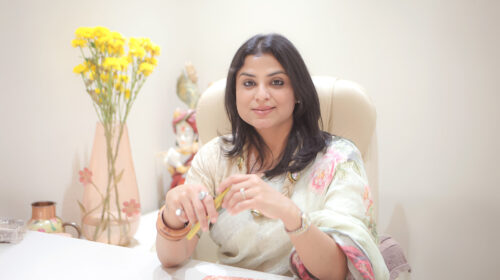
At Brilliant Read Media, it is our constant endeavour to identify and share some of the unique and compelling stories from the startup ecosystem. As part of this, we invited Dr. Anchal Gupta for an interview with Brilliant Read Media. To say further, Dr. Anchal is an Ophthalmologist and Founder at Netram Eye Foundation. Let’s learn more about her background, inspiring journey so far and her advice for our growing community!
Excerpts from our exclusive interview with Dr. Anchal:
Dr. Anchal, what inspired you to pursue ophthalmology, and what motivated you to dedicate your career to helping people restore and protect their vision?
As a child, I was an eye patient myself and had to wear very high-powered glasses. I remember visiting my ophthalmologist regularly, and every time my vision improved after the check-up, it felt almost magical to suddenly see the world more clearly. Those moments left a deep impression on me.
That experience sparked a curiosity and excitement about eye care at a very young age. Over time, that curiosity turned into a passion, and I realized I wanted to become an ophthalmologist so that I could give others the same joy of clear vision that I experienced.
Today, what motivates me most is helping people see the world better—whether it’s restoring sight through surgery or protecting vision through timely care. Being able to make such a meaningful difference in someone’s life is incredibly fulfilling.
You work across multiple specialties such as cataract surgery, LASIK, retina care, and cornea transplants. What drew you to these advanced areas of eye care, and which procedures do you find most rewarding?
Ophthalmology offers a unique blend of precision, technology, and the ability to make an immediate impact on a patient’s quality of life. That is what drew me to work across multiple advanced areas such as cataract surgery, LASIK, retina care, and cornea treatments—each field allows us to restore and preserve vision in different ways.
However, the procedure I find most rewarding is cataract surgery. It has the power to truly transform lives, especially for elderly patients who have become dependent on others due to poor vision.
With modern, advanced cataract techniques, we are often able to restore their sight and, with it, their independence.Seeing a patient regain the ability to perform daily activities on their own again is incredibly fulfilling.
In many ways, it feels like giving someone a new life, and that is what makes cataract surgery so special to me.
As an eye surgeon, you witness patients regain clear vision after treatment. Can you share a patient story that deeply touched you or reaffirmed why you chose this profession?
One of the most memorable patients I treated was an 80-year-old lady who came to me with advanced cataracts in both eyes. Her vision had become extremely poor, almost to the point where she could barely see anything, and initially, she had no desire to undergo surgery.
However, after we spoke and I explained the procedure to her, she became very enthusiastic and said something I will never forget — she wanted to get the surgery done just so that she could see me clearly.
We eventually went ahead with the surgery, and when her vision improved and she could finally see clearly again, the smile on her face was unforgettable. Moments like these remind me why I chose this profession — restoring someone’s vision truly means giving them a new perspective on life.
Through your platform “Ankhon Ki Doctor,” you simplify eye health for the public. Why do you believe spreading awareness about eye care on social media is so important today?
Today, a large part of people’s lives is spent on digital platforms, yet awareness about basic eye health is still very limited. Many eye conditions progress silently, and people often seek help only when the problem has already become serious.
Through my platform ‘Ankhon Ki Doctor,’I try to simplify eye care and explain it in a way that everyone can understand. Social media allows us to reach thousands of people at once, helping them learn simple habits, recognize early symptoms, and seek timely treatment.
If even a few people become more aware and protect their vision because of the information they saw online, I feel that the effort is truly worthwhile.
With increasing screen time among both children and adults, what are the most common eye problems you see today, and what preventive steps should people take?
With the significant increase in screen time today, the two most common eye problems we see are myopia (increasing power in children)and dry eye syndrome, especially in adults. In children, prolonged use of screens and reduced outdoor activity are contributing to a rapid rise in myopia.
Their eyes are constantly focusing on near objects like phones, tablets, or computers, which can accelerate the progression of power. In adults, long hours of screen use reduce our natural blinking rate, which leads to dryness, irritation, redness, and eye strain—commonly referred to as dry eye or digital eye strain.
The good news is that a few simple habits can make a big difference. I always recommend the 20-20-20 rule—every 20 minutes, look at something 20 feet away for at least 20 seconds. Children should spend at least 1–2 hours outdoors daily, which has been shown to slow myopia progression.
It’s also important to maintain proper screen distance, take regular breaks, blink consciously, and have routine eye check-ups. Small lifestyle changes today can go a long way in protecting our vision for the future.
There are many myths around LASIK, spectacles, and eye surgery. What are some common misconceptions you frequently address in your practice?
There are several myths around eye care that I frequently encounter in my practice. One of the most common misconceptions is that wearing spectacles increases the power of the eyes.
In reality, spectacles do not worsen your vision—they simply help you see clearly by correcting the existing refractive error. Another myth is that LASIK or vision correction surgery is unsafe or very painful. With modern technology, procedures like LASIK are extremely safe, quick, and usually completed within a few minutes with minimal discomfort.
Most patients are surprised at how smooth the experience actually is. Many people also believe that cataract surgery should only be done when the cataract is “fully ripe.”
This was true many years ago, but with today’s advanced surgical techniques, we can operate much earlier and restore vision before the cataract becomes too dense.
I believe addressing these myths is very important because misinformation often delays people from seeking timely treatment that could significantly improve their quality of life.
Ophthalmology has seen rapid technological advancements in recent years. How have innovations like touchless LASIK or advanced retinal treatments changed patient outcomes?
Ophthalmology has seen remarkable technological advancements in recent years, which have greatly improved the safety, precision, and outcomes of eye treatments. One such innovation is advanced LASIK technology using systems like the SCHWIND AMARIS.
This technology offers 7-dimensional digital eye tracking, which means the laser can track even the smallest movements of the eye in real time during the procedure. It also delivers around 5 lakh corneal laser spots, allowing extremely precise reshaping of the cornea for vision correction.
Because of this level of accuracy and customization, patients experience safer procedures, faster recovery, and very predictable visual outcomes. Such innovations have transformed ophthalmology, allowing us to perform vision correction procedures with greater confidence while giving patients the possibility of clear, spectacle-free vision.
Finally, what are three simple habits people can adopt daily to protect their eyesight and maintain healthy vision in the long run?
Protecting your eyesight does not always require complex treatments—simple daily habits can make a big difference in maintaining healthy vision.
First, follow the 20-20-20 rule, especially if you spend long hours on screens. Every 20 minutes, look at something about 20 feet away for at least 20 seconds. This helps reduce eye strain and prevents dryness.
Second, spend time outdoors, particularly for children. At least 1–2 hours of outdoor activity daily has been shown to help slow the progression of myopia.
Third, get regular eye check-ups, even if you feel your vision is normal. Many eye conditions develop silently, and early detection can prevent long-term damage. These simple habits can go a long way in protecting our eyes and preserving clear vision for years to come.
BrilliantRead is committed to bringing stories from the startup ecosystem, stories that reshape our perspective, add value to our community and be a constant source of motivation not just for our community but also for the whole ecosystem of entrepreneurs and aspiring individuals.
Note: If you have a similar story to share with our audience and would like to be featured on our online magazine, then please write to us at [email protected], we will review your story and extend an invitation to feature if it is worth publishing.